Continuing on the topic I brought up yesterday, let us discuss pilgrimage.
To many of you this is a term linked to Christianity, but in reality, “Pagan” Europeans went on pilgrimage thousands of years before Christianity was even a thing.
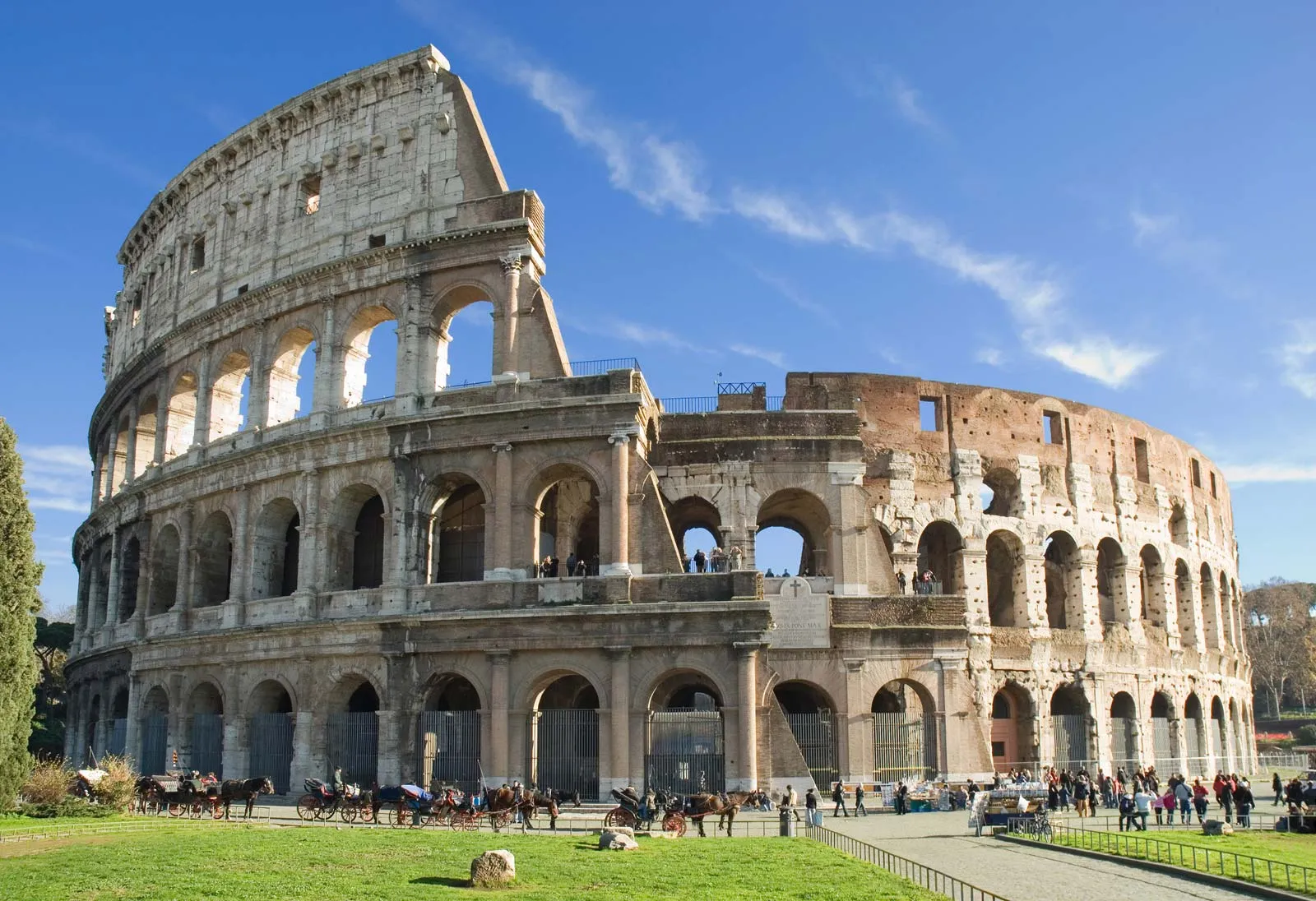
People in pagan cultures regularly traveled to sacred sites, holy springs (e.g., the Well of Segais), groves (e. g., the Nemeton), mountains, tombs, or oracles. In Ancient Greece pilgrimage to the Oracle at Delphi or Asclepian healing temples (like Epidaurus) was common.
Why?
Official history tells us they were seeking healing, wisdom, favor from the gods, or to fulfill vows.
I will not object to any of that, but they say nothing about how going on a pilgrimage to a sacred site could give you any of that. There is no explanation to how that works.
So let me clear that up to you….
If you read yesterday’s post, about how we understand by remembering, it should become evident to you: the original purpose of the pilgrimage is to visit places that you visited and knew from previous lives. To – yes – ‘seek healing, wisdom, favor from the gods’, and perhaps also ‘to fulfill vows’.
Because, by doing so you awaken memories from previous lives. You see the same trees and views that you saw in previous lives. You hear the same waterfall or trickling stream. You pick up the same scents, and sensations. You perform the same rituals. You sing the same songs. You recite the same verses. You experience the same.
You understand more, because you remember. You wake up – yourself. Your previous self. Ergo, indeed, you “heal” (become complete), you become wiser (to remember is to understand, to understand is to remember), you receive favor from the gods (you re-claim and strengthen your magical force, the Hamingja). You pick up the runes (secrets) that you knew in previous lives.
Yes! You become yourself.
Remember this the next time you want to visit some historical site…. You might have that desire for a reason.
Heinrich Himmler, the head of the SS (Schutzstaffel), banned SS soldiers from openly attacking Christianity, despite his own personal disdain for the religion, for several strategic and political reasons:
1. Maintaining Public Support:
Christianity, particularly in its Catholic and Protestant forms, was deeply entrenched in German society during the NS era. Openly attacking Christianity would have alienated large portions of the population, many of whom were religious or had strong Christian cultural ties. Himmler and the NS leadership understood that the regime needed to avoid widespread discontent among Christians, who represented a significant part of the German populace. To maintain public support and avoid backlash, it was prudent not to make religion a public target.
2. Avoiding Conflict with the Churches:
While there was tension between the NS regime and the Christian churches, the National Socialists often sought to manage this tension carefully. Himmler understood that directly attacking Christianity would provoke stronger resistance from church leaders and institutions. The Catholic and Protestant churches were influential, with deep-rooted authority in their communities, and a direct confrontation could have created social and political instability.
3. Incremental Control over Religion:
Himmler and other leading National Socialists believed that, in the long run, Christianity would fade away as NS ideology and the SS’s pagan and occult-influenced beliefs took hold. However, they sought to implement this transition gradually. Himmler encouraged the spread of alternative belief systems within the SS, including paganism and Germanic mysticism, but he avoided outright attacks on Christianity to keep the process more subtle and less confrontational.
4. Hitler’s Influence:
Adolf Hitler himself had a complex relationship with Christianity. Although privately critical of the religion, Hitler recognized the political need to manage the relationship with Christian institutions. He understood the dangers of waging a direct, all-out attack on Christianity while trying to consolidate power. Himmler, being a loyal follower of Hitler’s directives, likely refrained from allowing the SS to attack Christianity as part of a broader NS strategy of maintaining public order and control.
5. Unity Among Soldiers:
The SS recruited men from a variety of backgrounds, many of whom came from Christian families. Openly attacking Christianity could have alienated some soldiers or caused division within the SS ranks. Himmler prioritized loyalty to the SS and its broader mission, and any ideological conflict over religion could have weakened this cohesion.
In summary, Himmler banned SS soldiers from attacking Christianity to avoid alienating the German public, maintain political stability, and ensure the loyalty and unity of the SS. While Himmler harbored anti-Christian sentiments and promoted pagan beliefs, he understood the importance of a more subtle, long-term approach to reducing Christianity’s influence in favor of NS ideology.
But were their concerns legitimate?
Were the Christians resisting the NS regime and ideology, and were they discontent?
Some Catholic leaders, including Pope Pius XI (in the 1937 encyclical Mit brennender Sorge), criticized the NS regime, particularly its racist ideology.
Bishop Clemens August von Galen delivered powerful sermons in 1941 condemning the NS euthanasia program, which led to a temporary suspension of the program.
Pastor Dietrich Bonhoeffer, a prominent theologian, became an outspoken critic of the National Socialists. He was involved in the Confessing Church and later in a conspiracy to overthrow Hitler. He was arrested in 1943 and executed in 1945.
Many (about 5000) individual clergy members, both Catholic and Protestant, resisted NS ideology, particularly when it contradicted Christian teachings (and it did). Some provided sanctuary to Jews, while others criticized NS policies publicly, leading to their arrest, imprisonment, or execution.
The White Rose: This was a student-led resistance group in Munich that included devout Christians, such as siblings Sophie and Hans Scholl. They distributed anti-NS leaflets, advocating for passive resistance against the regime. They were arrested and executed in 1943.
Claus von Stauffenberg, a devout Catholic, was part of the July 20 Plot (1944) to assassinate Hitler. While his motivation was primarily military and political, his Christian faith informed his moral stance against Hitler’s regime.
Henning von Tresckow, another Christian officer involved in the July 20 Plot, viewed the overthrow of Hitler as a moral imperative to save Germany from destruction.
They also saw how the Norwegian Church (i. e. 800+ clergymen) had revolted against the NS regime in Norway, in 1942, because the NS ideology crashed with their Christian beliefs, and because the NS regime there tried to replace Christianity with NS ideology. The revolt had been rather effective too, and to a large degree crippled the NS regime in Norway, making it unable to work effectively. The Germans saw the same tendencies in the German Churches, and did not want the same to happen in Germany.
Therefore, they banned criticism of Christianity for some time, thinking it would calm the Christians down a bit, and then…
… they would root out Christianity, and remove it lock, stock, and barrel, after the war had been won.
However, as you know, they lost the war. Therefore that never happened.
One of the most recurring themes of our pre-Christian history, is the topic of asking the gods for advice. You find it in the Norse sagas, in the form of “divination”, you find it in Greek sources, in Celtic sources as well as in Roman sources.
Asking the gods for advice on what to do was common! This is what they did, when they were uncertain on what to do, and when they needed advice.
Also, they had great respect for the answers they received, when they did this. To some extent, the result was law, and they were obliged to follow the divine advice!
Today many will think of this as folly, and see our forebears as superstitious, ignorant and incredibly naive.
But were they?
First of all we must understand the nature of this process. What did they do? What was this all about?
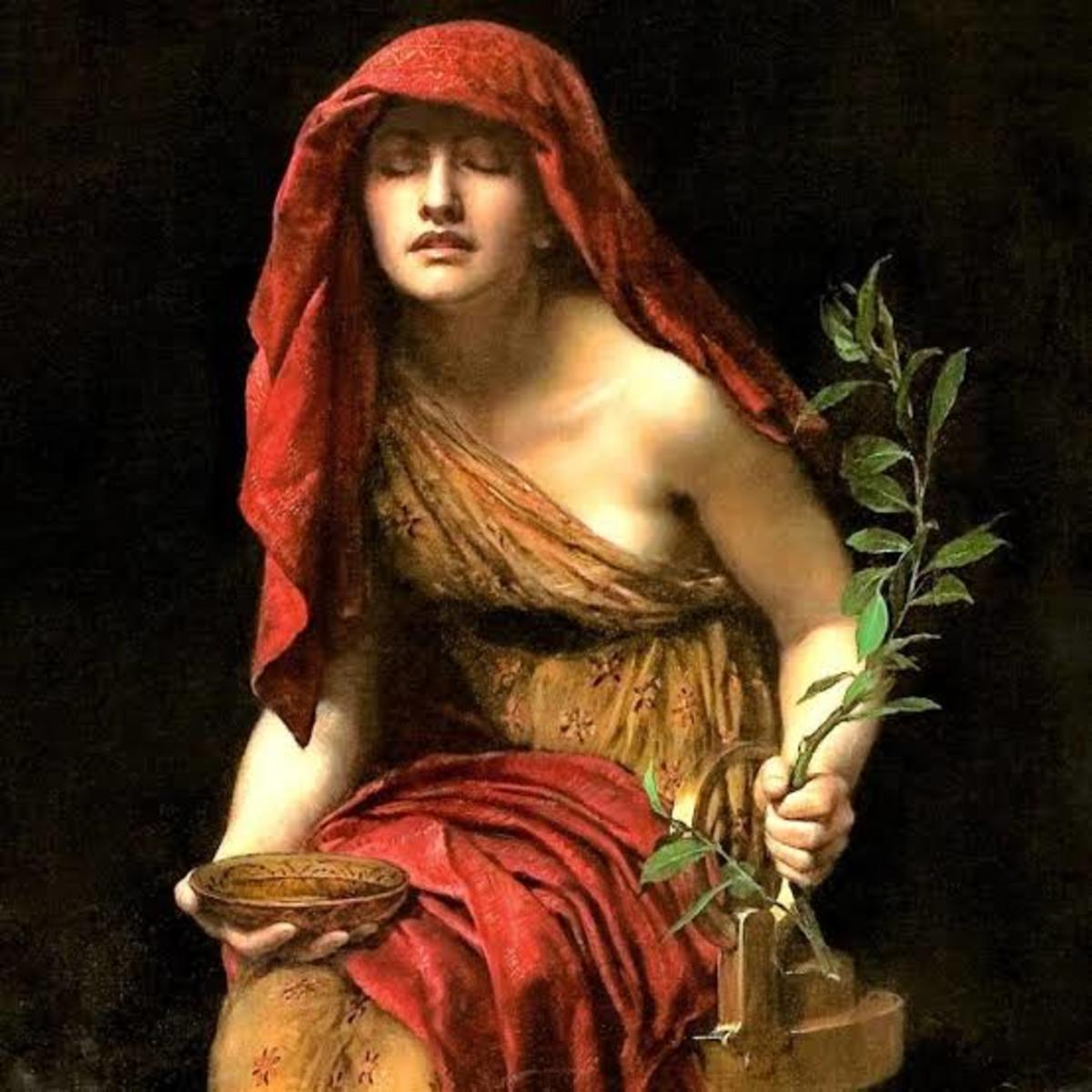
They commonly received a simple “yes” or “no” as an answer to their questions, or indeed when they asked deities directly (i. e. priests or priestesses impersonating them) they would receive answers in form of riddles – that were open for interpretation.
In Germanic cultures, in Classical Antiquity, they could ask the gods for advice by e. g. placing their spears on the ground, in a pile, and ask a young boy to ride a horse over them, to know whether or not they should go to war. If the horse stepped on one or more spear shafts, it meant “war”. If it did not, it meant “not war”. Or they cut some pieces of wood and drew some symbols (no not runes… there is zero evidence to suggest they used runes for this) on them, and then they threw them to the ground, and read what symbols appeared and interpreted the result from that.
The “problem” here is that we still do this… no, not exactly like that, but when we are uncertain on what to do, we let chance decide. And we do that by flipping a coin, by casting dice, by playing “paper, rock, scissors”, or something like that. This is the same! Yes! This is what they did in the past too, and this is “asking the gods for advice”! It was more complicated some times, like with the young boy riding a horse across a pile of spears, but it was the same. And our forebears knew this perfectly well! They knew that this was chance telling them what to do. And this chance was seen as sacred and you had to respect it.
Naturally, they only asked chance when they did not know what to do, or if their voting did not produce a clear result! If they knew what to do, they would, what was best for them, then they did that – and never needed to ask the gods (chance) for advice. Again; like we still do.
When they asked the gods or goddesses themselves (impersonated by priests or priestesses) for advice, they did not trust chance directly, but instead let someone else decide, someone impartial. If these deities were uncertain themselves, they could ask chance, in a similar manner!
The riddle as an answer served a purpose too. The deities were not always absolutely certain themselves, so they did not want to say directly what their followers should do. What if they gave them bad advice!? Instead, they commonly gave a vague and general advice, that their followers could build on, and interpret themselves – they way they wanted to.
The ritualization of all of this this served a purpose too. Common people are more impressed if you make it more systematic, complicated and incomprehensible. They will believe more in it, if you have a system that you follow consequently. “This is how it is done”, followed by a time-consuming and intricate ritual, is more convincing than “heads or tails”? Sure, the latter works too, but the former is more convincing to most people. And yes, believing in the result can be important. Not just for placebo effect, but also to take away doubt and remove and half-heartedness in people. “Whatever you do, do with all your might”, after all. Half done, is not done. Half done, is badly done.
They knew perfectly well that all of this was a matter of chance, but they grew up and were educated into believing more in chance than we do today. Yes, even more than we are today. Chance was the will of the gods! Chance was sacred! Chance was law! Chance was fate!
The difference today is mainly that we leave less to be decided by chance, and that we ask chance mainly for less important matters. “Shall we watch this or that DVD tonight?” Or “Who gets to sit in the front passenger seat of the car?” Maybe because we think we know better, and think we are better equipped to know what to do, or of course because we have lived under the tyranny of Judeo-Christianity for hundreds of years.
The Pagan ideas remain though, and are still ingrained in our minds, spirits and physical beings. We still ask “the gods” for advice. We still often let chance decide.
Predicting a fairly detailed future of individuals was done too though, but for that they used the Norns, and that is a completely different topic, that I will discuss in another post….

 Thulean Perspective