The Noble Savage

According to Ovid, The Golden Age was a time of perfect innocence and harmony. Humanity lived without laws, toil, or fear. The earth provided for all, and there was no need for labor, war, or travel. People were just by nature, not by compulsion.

“The golden age was first, which, without a ruler,
cherished of its own will faith and right.” (Metamorphoses I.89–90)

No ships (no navigation or seafaring), no agriculture/animal domestication or tools, no metal use, no cities, no states, no private property, no laws, no warfare, no need for houses (they lived in caves), no architecture, no clothing, or toil. People lived directly from what nature provides (as hunter-gatherers) in small, egalitarian groups. And yes, this describes the Paleolithic perfectly….

Ovid describes it as a natural paradise, where man lived in simplicity and peace.

***

The Silver Age began when Jupiter (Zeus) overthrew Saturn (Cronus) and introduced the first decline. Seasons appeared, ending eternal spring. Men had to build shelters and till the soil for food. This was the age when hardship and labor entered the world.

“Then Jupiter shortened the period of ancient spring,
and through winter, summer, and unequal autumn
and short spring, made the year revolve.” (I.112–114)

The sun’s course divided the year into seasons. Men had to use agriculture and build homes. Though still pious, men began to lose innocence and grew more dependent on toil. This, naturally, describes the Neolithic perfectly…

***

From this came the Bronze Age and it was rougher and more warlike. Men became fiercer and quicker to arms, though not yet wholly wicked.

“Next came the brazen type of man, more fierce in temper,
and readier for war, yet not impious.” (I.125–126)

Courage and conflict replaced the innocence of earlier ages. Still, some sense of honor and restraint remained.

***

Then finally, we arrive in the Iron Age (the age of Ovid’s own time, Classical Antiquity), the nadir of human morality. All virtues vanished; greed, fraud, and violence prevailed. Men sailed the seas, claimed private property, mined the earth for wealth, built cities, states, and even empires, and waged war on one another. Faith, truth, and modesty fled from the earth.

“Straightway all evils burst into this age of baser vein:
Modesty, truth, and faith took flight,
and in their place came fraud and trickery,
violence and the wicked love of gain.” (I.129–131)

Humanity desecrated nature and the gods. Ovid’s tone is mournful, lamenting mankind’s moral decay.

***

But what is ‘the desecration of nature and the gods’? According to Ovid, this is the exploitation of resources, rather than living in harmony with nature. This is a disrespect of the divine law and order, through violence, impiety, and greed.

He is lamenting the decline as tragic: humanity is capable of great virtue, but it has turned away from the harmony of the Golden Age. In other words: Ovid mourns what humans have lost, not what they have gained materially. Technology, war, and law may advance, but they represent a moral decline, which is the real tragedy.

As you can tell, this is in direct contrast to modern archaeology, where every technological achievement is seen as an ascent.

The ancient way of thinking was that the more men work, build, and exploit nature, the more they lose virtue. Technological advancement and moral decline go hand in hand. Each invention or discovery that makes life materially easier also takes mankind further from natural virtue and divine harmony. The modern way of thinking, on the other hand, is that the more men work, build, and exploit, the more they gain mastery and power, and the more advanced they are.

This anti-modern view was not just something we find in Ovid’s writing, though. It was deeply rooted in Greek thought before Ovid: Hesiod (8th century BC) had said exactly the same in Works and Days: that life worsened as men invented crafts, weapons, and cities. Lucretius (1st century BC), though an Epicurean materialist, also describes early man as closer to nature and therefore more innocent. Virgil, in his Georgics, longs for the rustic simplicity of the early world.

In other words, for the ancients, “progress” was moral regression. Technology, wealth, and mastery over nature were not triumphs, but symptoms of alienation; the loss of the divine harmony that once guided human life.

Conclusion:

Long before Rousseau, the ancients already idealized the uncorrupted natural man; the one untouched by luxury, money, or empire. When Rousseau (18th century) wrote of the “noble savage” (the natural man unspoiled by civilization) he wasn’t inventing a new idea. He was reviving the classical Pagan idea of the Golden Age, reinterpreted through modern philosophy. Rousseau’s “state of nature” is simply Ovid’s “Golden Age” restated. Rousseau gave it a social-contract framework; the ancients gave it a mythic and moral one. But the underlying idea is the same.

Man is born good in nature and becomes evil through civilization.

This skepticism toward technological and social ‘progress’ is characteristic of the Pagan worldview. The noble savage represents the ideal Pagan man: morally virtuous, living in harmony with nature, and uncorrupted by wealth, luxury, or social artifice.

For us today, I would claim that we should hope for individuals (likely) and entire socieites (less likely) to recover virtue and live according to nature (and thus the divine), by using knowledge and tools wisely rather than letting them enslave the soul. The virtuous man has a moral armor, and are less susceptible to the chaos, greed, and other corruption that sweep through our societies today. When others fall, the true Pagan will maintain integrity, be self-sufficient, live in harmony with nature, and have association with like-minded people (only?).

Varg Vikernes

Sources:
Hesiod (Erga kai Hēmerai), Lucretius (De Rerum Natura), Virgil (Eclogues, Georgics), Seneca (De Vita Beata, Epistulae Morales ad Lucilium, and De Beneficiis), Tacitus (Germania), Ovid (Metamorphoses).

Pilgrimage

Continuing on the topic I brought up yesterday, let us discuss pilgrimage.

To many of you this is a term linked to Christianity, but in reality, “Pagan” Europeans went on pilgrimage thousands of years before Christianity was even a thing.

People in pagan cultures regularly traveled to sacred sites, holy springs (e.g., the Well of Segais), groves (e. g., the Nemeton), mountains, tombs, or oracles. In Ancient Greece pilgrimage to the Oracle at Delphi or Asclepian healing temples (like Epidaurus) was common.

Why?

Official history tells us they were seeking healing, wisdom, favor from the gods, or to fulfill vows.

I will not object to any of that, but they say nothing about how going on a pilgrimage to a sacred site could give you any of that. There is no explanation to how that works.

So let me clear that up to you….

If you read yesterday’s post, about how we understand by remembering, it should become evident to you: the original purpose of the pilgrimage is to visit places that you visited and knew from previous lives. To – yes – ‘seek healing, wisdom, favor from the gods’, and perhaps also ‘to fulfill vows’.

Because, by doing so you awaken memories from previous lives. You see the same trees and views that you saw in previous lives. You hear the same waterfall or trickling stream. You pick up the same scents, and sensations. You perform the same rituals. You sing the same songs. You recite the same verses. You experience the same.

You understand more, because you remember. You wake up – yourself. Your previous self. Ergo, indeed, you “heal” (become complete), you become wiser (to remember is to understand, to understand is to remember), you receive favor from the gods (you re-claim and strengthen your magical force, the Hamingja). You pick up the runes (secrets) that you knew in previous lives.

Yes! You become yourself.

Remember this the next time you want to visit some historical site…. You might have that desire for a reason.

Dixi.

V.

Cross-Dressers…

Quite often, I see Judeo-Christians attack Pagan deities for “cross-dressing”. At the same time, their clergy, priests as well as monks, literally cross-dress 100% of the time. Yes! Your priests and monks are wearing DRESSES (robes). They are ALL cross-dressers.

Now, I know WHY they do this, so let me explain….

Our (Pagan) traditions are based on animism, the idea that there is a spirit in everything. These spirits, however, are not always clear-cut male or female. In fact, they are pretty much always hermaphroditic (both male and female). Therefore, in some European cultures, e. g. the Sun Deity was a God (like in the Greek one), and in others (like the Germanic one) a Goddess. In reality, though, the Sun deity was both male and female – everywhere.

Our forebears believed in sympathetic magic, meaning that you gain the power of what you impersonate or pretend to be. So to gain the power of a deity, they dressed up as that deity, and basically LARPed as that deity. By doing so they BECAME that deity!

Now, since the deities were both male and female, this meant that a man impersonating the deity would have to put on a robe, i. e. women’s clothing, because the deity was both male and female. And, likewise, a woman impersonating a deity had to put on man’s clothing on her upper body. For the same reason.

Now, Judeo-Christianity is completely and utterly just a cheap copy of Pagan religions, where all sorts of Pagan ideas and myths and ideals have been swallowed raw (and never digested or understood), so naturally, their clergy is just like the PAGAN “clergy”: they too “cross-dress”. Although, they have no idea WHY, and it makes ZERO sense for them to do so, and they have ZERO power over anything at all. It just proves that they never understood the customs they copied from Pagan religions.

Yet, this is the reason WHY the Judeo-Christian priests and monks dress as WOMEN. This is the why they are all cross-dressers.

In the case of the Pagans, it had nothing whatsoever to do with what we today think of as cross-dressing, there was nothing sexual about it, but as we know from crime statistics, it might well be related to that for Judeo-Christian clergymen, who are, as we all know, massively over-represented in rape cases and sexual abuse cases against especially same-sex children.

Thank you for your attention.

Why did Himmler ban SS soldiers from attacking Christianity?

Heinrich Himmler, the head of the SS (Schutzstaffel), banned SS soldiers from openly attacking Christianity, despite his own personal disdain for the religion, for several strategic and political reasons:

1. Maintaining Public Support:

Christianity, particularly in its Catholic and Protestant forms, was deeply entrenched in German society during the NS era. Openly attacking Christianity would have alienated large portions of the population, many of whom were religious or had strong Christian cultural ties. Himmler and the NS leadership understood that the regime needed to avoid widespread discontent among Christians, who represented a significant part of the German populace. To maintain public support and avoid backlash, it was prudent not to make religion a public target.

2. Avoiding Conflict with the Churches:

While there was tension between the NS regime and the Christian churches, the National Socialists often sought to manage this tension carefully. Himmler understood that directly attacking Christianity would provoke stronger resistance from church leaders and institutions. The Catholic and Protestant churches were influential, with deep-rooted authority in their communities, and a direct confrontation could have created social and political instability.

3. Incremental Control over Religion:

Himmler and other leading National Socialists believed that, in the long run, Christianity would fade away as NS ideology and the SS’s pagan and occult-influenced beliefs took hold. However, they sought to implement this transition gradually. Himmler encouraged the spread of alternative belief systems within the SS, including paganism and Germanic mysticism, but he avoided outright attacks on Christianity to keep the process more subtle and less confrontational.

4. Hitler’s Influence:

Adolf Hitler himself had a complex relationship with Christianity. Although privately critical of the religion, Hitler recognized the political need to manage the relationship with Christian institutions. He understood the dangers of waging a direct, all-out attack on Christianity while trying to consolidate power. Himmler, being a loyal follower of Hitler’s directives, likely refrained from allowing the SS to attack Christianity as part of a broader NS strategy of maintaining public order and control.

5. Unity Among Soldiers:

The SS recruited men from a variety of backgrounds, many of whom came from Christian families. Openly attacking Christianity could have alienated some soldiers or caused division within the SS ranks. Himmler prioritized loyalty to the SS and its broader mission, and any ideological conflict over religion could have weakened this cohesion.

In summary, Himmler banned SS soldiers from attacking Christianity to avoid alienating the German public, maintain political stability, and ensure the loyalty and unity of the SS. While Himmler harbored anti-Christian sentiments and promoted pagan beliefs, he understood the importance of a more subtle, long-term approach to reducing Christianity’s influence in favor of NS ideology.

But were their concerns legitimate?

Were the Christians resisting the NS regime and ideology, and were they discontent?

  • Some Catholic leaders, including Pope Pius XI (in the 1937 encyclical Mit brennender Sorge), criticized the NS regime, particularly its racist ideology.
  • Bishop Clemens August von Galen delivered powerful sermons in 1941 condemning the NS euthanasia program, which led to a temporary suspension of the program.
  • Pastor Dietrich Bonhoeffer, a prominent theologian, became an outspoken critic of the National Socialists. He was involved in the Confessing Church and later in a conspiracy to overthrow Hitler. He was arrested in 1943 and executed in 1945.
  • Many (about 5000) individual clergy members, both Catholic and Protestant, resisted NS ideology, particularly when it contradicted Christian teachings (and it did). Some provided sanctuary to Jews, while others criticized NS policies publicly, leading to their arrest, imprisonment, or execution.
  • The White Rose: This was a student-led resistance group in Munich that included devout Christians, such as siblings Sophie and Hans Scholl. They distributed anti-NS leaflets, advocating for passive resistance against the regime. They were arrested and executed in 1943.
  • Claus von Stauffenberg, a devout Catholic, was part of the July 20 Plot (1944) to assassinate Hitler. While his motivation was primarily military and political, his Christian faith informed his moral stance against Hitler’s regime.
  • Henning von Tresckow, another Christian officer involved in the July 20 Plot, viewed the overthrow of Hitler as a moral imperative to save Germany from destruction.

They also saw how the Norwegian Church (i. e. 800+ clergymen) had revolted against the NS regime in Norway, in 1942, because the NS ideology crashed with their Christian beliefs, and because the NS regime there tried to replace Christianity with NS ideology. The revolt had been rather effective too, and to a large degree crippled the NS regime in Norway, making it unable to work effectively. The Germans saw the same tendencies in the German Churches, and did not want the same to happen in Germany.

Therefore, they banned criticism of Christianity for some time, thinking it would calm the Christians down a bit, and then…

… they would root out Christianity, and remove it lock, stock, and barrel, after the war had been won.

However, as you know, they lost the war. Therefore that never happened.

The Glorious Cathedrals of Europe

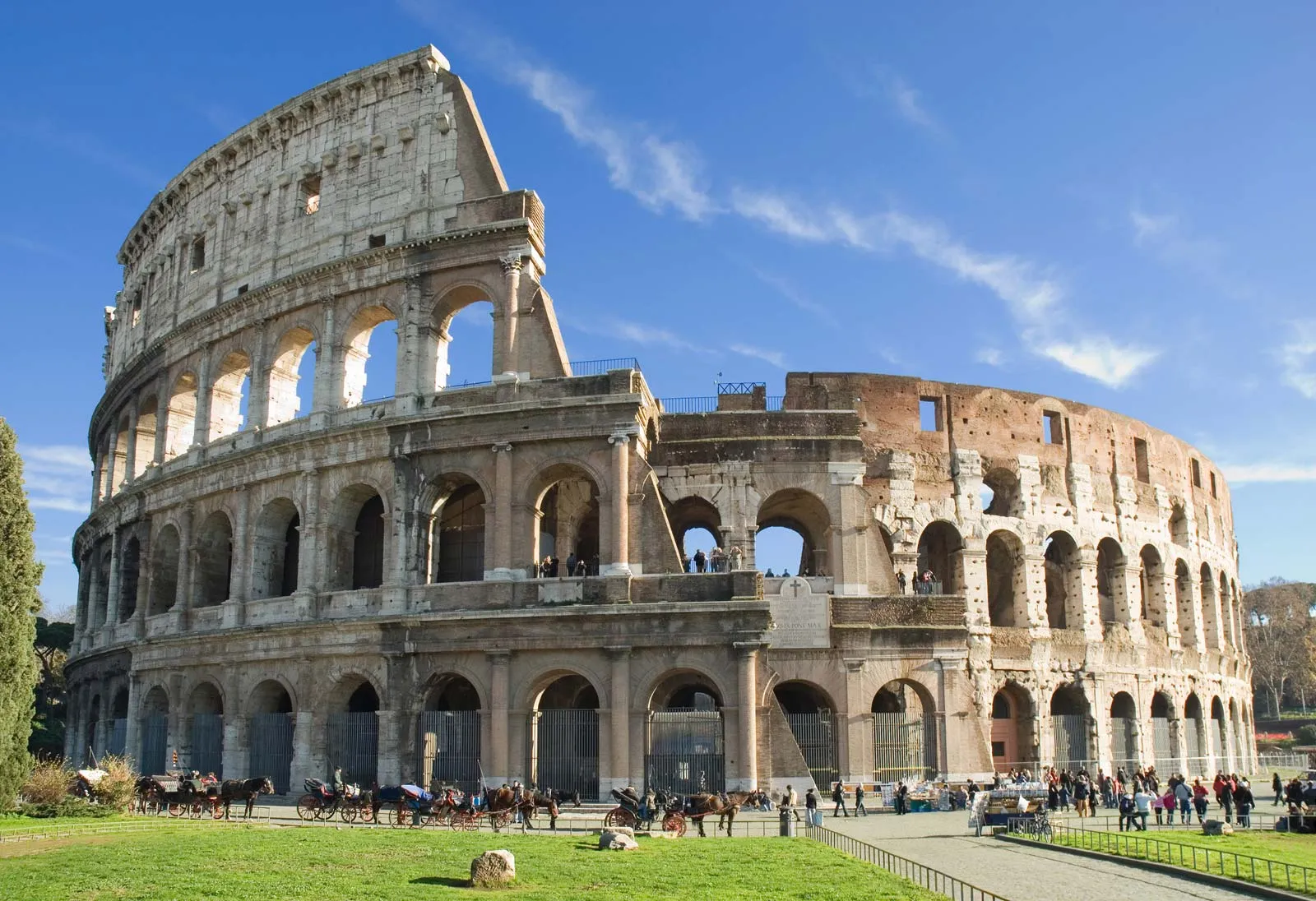
When I argue that Christianity suffocated Europe intellectually and spiritually, and left our culture and populations dramatically reduced in all ways, the standard reaction from Christians is to show images of the “magnificent” cathedrals built by the Christians in the Middle Ages. This is supposed to prove that I am wrong, and that Christianity did not actually turn Europeans into ignorant, filthy, broken and dramatically reduced primitives. Instead, we, they argue, became better and started to build glorious temples for the new Semitic idol. Because “of course”, before Christianity we were indeed ignorant primitives.

You can of course easily list endless examples of “glorious” buildings in biological Europe from before Christianity had even been invented. All the seven wonders of the Ancient World were built by Pagans. Every single one of them. The Greeks built magnificent temples to their Pagan Gods, and the Romans did too. They also built aqueducts, bridges, sewers, theaters and more, en masse, and even the “barbarians” of Europe built magnificent ships, the Stone Henge, the New Grange burial mound, and numerous beautiful wooden temples. Only someone extremely ignorant will believe in the lies of the Christians. Even civilization itself was built by Pagans. In Europe by the Romans and Greeks. And it barely survived Christianity!

But they are correct that the architecture skills in Europe survived Christianity. And it did because the Christians wanted to build temples to their immigrant idol, to impose their Semitic beliefs on the Europeans, to force them to worship their Hebrew tribal “god”, to scare them and to ensure control. These temples were not only temples, but also intelligence gathering centers, where any and all opposition could be picked up, identified and “dealt with”.

And they did “deal with” the Pagans in all areas they took over. They burnt the Pagan temples, often with the Pagan priests inside, executed all who refused to bend their knee to the new Semitic idol and ruthlessly rooted out all European culture, as best as they could. When they failed, they Christianized it instead, and made it part of their own alien cult. Like they did with all our Pagan festivals.

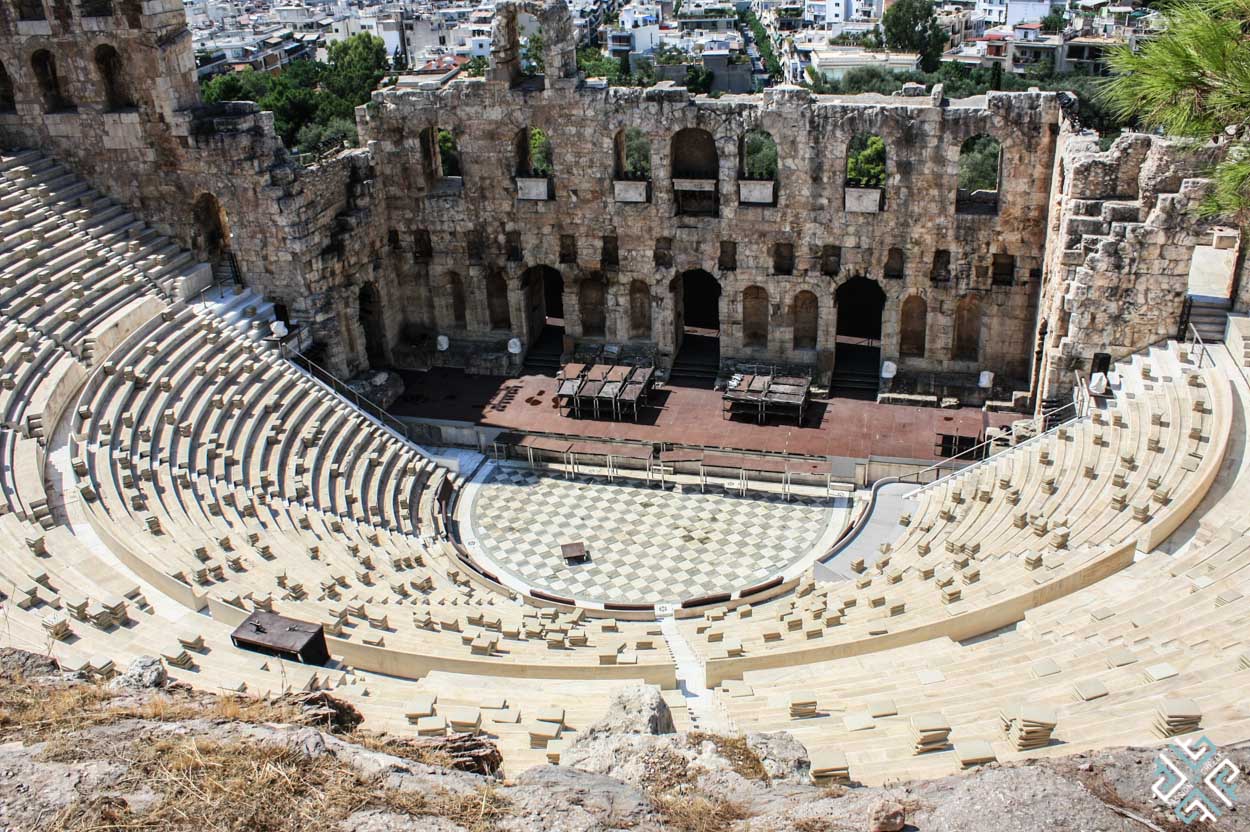
The fate of everything else, everything except architecture, is a different story. And even in architecture Europe lost much. Existing buildings were not only neglected by them, but were actually also vandalized and often destroyed, and many building techniques were forgotten. Streets and bridges made by the Pagans were still used, but they built no new roads and did not maintain the old ones. The new bridges they built were of vastly inferior quality, and none of them survived time. The old roads and bridges, built by Pagans, survived only because they had been so well made. Public baths, sewers and aqueducts were destroyed by them, or left unused. Eventually they collapsed, of course. When you see images of Ancient Greek open theaters, overgrown and abandoned, you must understand that they did not “fall out of use”, but the use of theaters was banned by the Christians! Acting only survived as Christian propaganda, and this was done as in religous plays in the churches themselves.

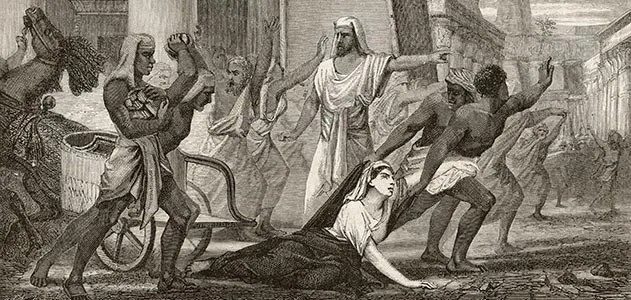
Below: Hypatia (a Greek living in Alexandria, then part of the East Roman Empire) murdered, by a Christian mob.

Old Pagan philosophy schools, sports arenas, baths, horse racing courses, libraries, and so forth were all shut down. More than ten thousand libraries in Europe were burnt down by the Christians! Sport itself was suppressed and partly survived only because it was practiced in remote locations out of reach of the power of the church. Only religious sculptures were allowed, and they were made of inferior materials and in a quality and with a technique vastly inferior to that of the Ancient Pagan world, and nothing even half-way comparable to the Ancient sculptures were made until the Renaissance (of Pagan ideas and ideals!).

When it comes to philosophy, the Church burnt all existing works, with only a few exceptions (mainly in the East Roman Empire), where they kept them hidden from the public. They established a monopoly for philosophy. Real philosophers were censored, persecuted, and even murdered. Nothing of any value was made from the time the Christians murdered Hypatia during the Christianization of Greece, until the Renaissance, when ancient Pagan philosophy was revived. And I may add that the Renaissance was possible only because the Muslims had kept much of the Ancient philosophical works that they had come across. When the Muslims were defeated, in Spain and Portugal, as well as in North Africa and the Middle East, many of these ancient Pagan works were found by European knights, and brought back to Europe. Also, when the Muslims defeated the East Roman Empire, and sacked their capital, the old libraries of the elite, where the Christians had secretly kept some of the ancient European texts, were plundered by the fleeing Greeks, who brought these books as refugees to Italy (mainly). Books were very valuable at the time, so they did that to sell them them; to make sure they would have some money when they arrived, and thus an ability to survive there.

Education was common in the Ancient world, and everyone had been taught to read and write. Public schools were built and paid for by the rich! After Christianity though, all education was denied for almost all Europeans, except to a few rich people and those who planned to become priests. Education became limited to Christian indoctrination.

It does not stop there though! Dance was banned as “Pagan”, tribalism was of course banned and replaced by Christian kingdoms, history was replaced by pure fabrications and lie-propaganda, and mathematics was treated as Pagan philosophy and was reduced to the simple arithmetic needed to calculate the date of Easter. All medicine was banned, and diseases were instead seen as rightful punishment for sins. Hygiene was abandoned as un-Christian. Painting too was banned, except for religious themes for use in Christian propaganda and churches. Pre-Christian art was destroyed whenever they came across it. Most painting techniques were forgotten, and lost for centuries, until they were re-discovered because of the Renaissance (of Pagan ideas and ideals).

When you see magnificent paintings and sculptures appearing in Christian Europe, in the 14th century, this is because of the Renaissance of Pagan ideas and ideals.

And how did the Christians react to that!?

Yes! This is the moment in history when they started burning “witches”. They saw their monopoly and power disappear, as more and more Europeans returned to their own roots and embraced Pagan ideas and ideals again. So the Christians fought back, to keep their power! They did that by murdering more Europeans, by torturing them and burning them alive, in public, to “scare straight” the Europeans. And of course, they murdered mainly those who were the keepers of the Pagan traditions: women. In particular the midwives.

Yes! The Pagan tradition was kept mainly by women, just like all traditions even today are. Mainly women keep the traditions. Without our women, even Yule and Easter, would have been lost ages ago already.

And this is where it gets interesting, because the church mainly murdered women in Protestant countries. Why?

Well, the Protestant countries were “by chance” also the countries that had been Christianized last. In Southern Europe, the Christians had destroyed everything Pagan for hundreds of years already, even for a thousand years, so there was very little left to destroy there. Even the populations themselves were largely mixed with North Africans and Semitic peoples. When the Renaissance re-kindled old ideas and ideals there, and not least skills, the Pagan awakening was not as dramatic as it was when these ideas and ideals reached Central, Western and Northern Europe. In these mainly Protestant parts of Europe the European blood was still overwhelmingly dominant. The Pagan memory was still very much alive. Christianity had not yet had the time to destroy their blood and heritage completely. It was still “too easily” re-kindled there. And dramatic measures were necessary, to stop that!

I can add that when they had burnt most of our midwives, the traditional sages and keepers of (Pagan) traditions in Europe, they replaced them with male doctors, and the mortality rates for both new-borns and women giving birth sky-rocketed. When it had been fairly safe to give birth before, it from then on became incredibly dangerous to give birth.

An ancient Greek theater. Fallen into ruins, because the Christians BANNED theaters. Partly repaired in modern times.

The conclusion I will draw from all of this, is that yes, architecture survived Christianity, and “glorious” temples for their Semitic “god” were indeed built in Europe, before the Renaissance of Pagan ideas and ideals, but everything else was banned and if possible destroyed by Christianity. Intellectually and spiritually, and even physically, Europe was sent into a dark abyss by the Christians, and we only survived because we found back to our Pagan roots.

We are still in this dark and dangerous Semitic abyss. But we are slowly and surely saving ourselves, from the plague called Christianity. Many keep falling, and err in the darkness, but many others or later also manage to climb out and see the light again. Like people emerging from Plato´s cave. Thankfully, only some of us, the most broken, useless and worthless amongst us, are still blinded by the idiotic lies of Christianity.

What started with the Renaissance is not over yet. We are still waking up. And fear not, fellow Europeans! We will wake up completely, before they manage to destroy us and wipe our name from the records of man.